
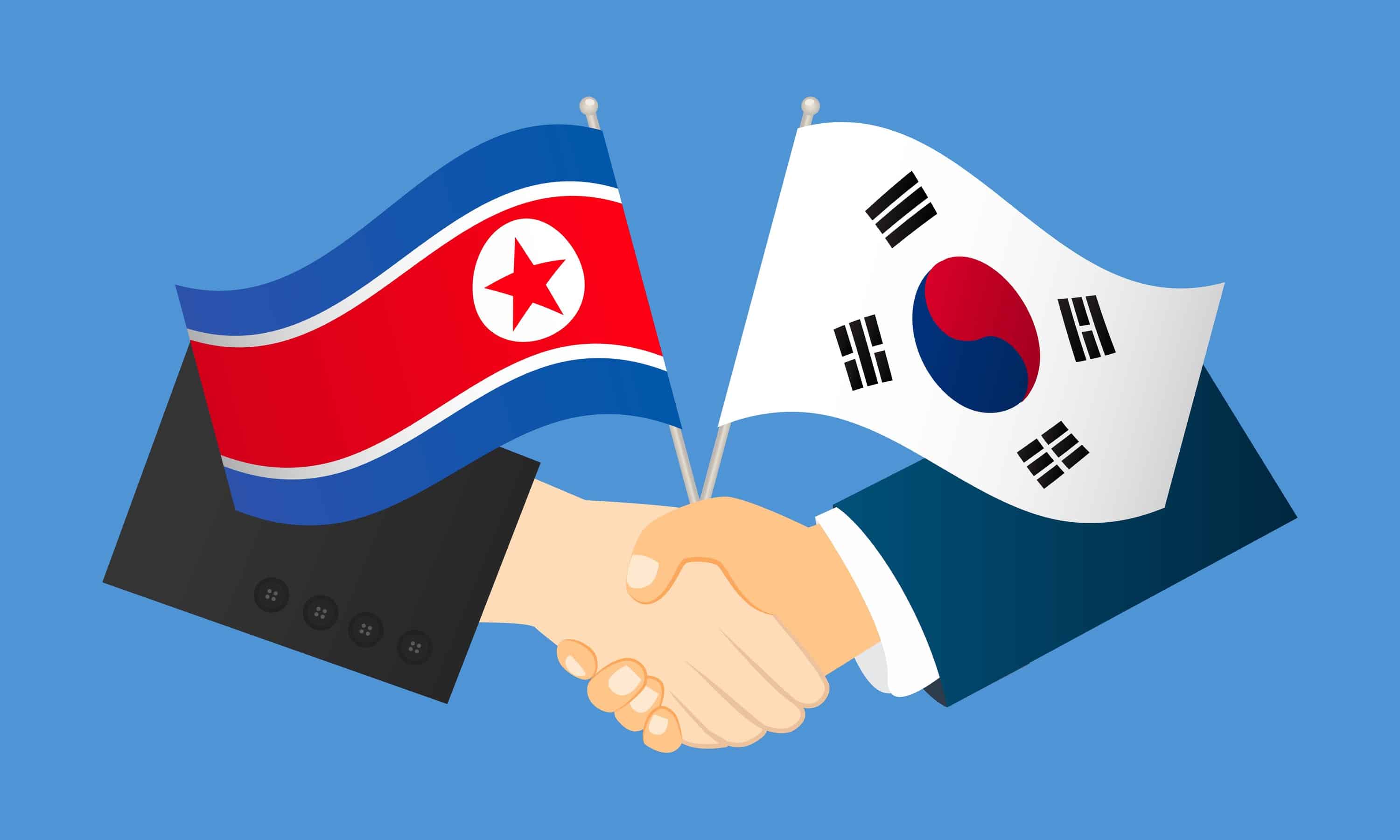

Relational peacebuilding in Korea
Relational Peacebuilding (also set up by our founder Dr Michael Schluter) are currently running a major project looking at the scope for developing cross-border relationships in Korea. Our limited involvement has been in helping to think through the relational implications of bringing together very different health and education systems.
Relationships have been unsettled in the Korean Peninsula since 1950, and indeed for several decades before that. Despite many families having members on both sides of the 38th Parallel, and many attempts at détente, relations between DPRK and ROK have remained polarised and often tense, as today. However, the shared language and long history of Korean culture offers hope that the future lies in unity rather than division. What is critically needed is an agreed ideological foundation and framework for political economy which can enable all parties to come together around a shared vision for the future of the Peninsula. What needs to be worked towards is a true partnership, and transformation of the political economy of both societies, through re-focusing on the importance of relationships in families, communities, companies, schools and across society. This draws on the deepest roots of Korean culture, which emphasises the importance of relationships for personal well-being, stable families, communities, and national and international security.
Relational Peacebuilding Initiatives are putting plans in place to conduct a high-level, confidential process to build trust across the political divides to envision a common peaceful future for Korea and all its neighbours, and to build the necessary background trust in order to enable the achievement of a sustainable social and economic settlement in that country.
The objectives, building on the experience of work in South Africa and Rwanda, are:
- To show how a relational approach can provide a framework for public policy in the Korean Peninsula because it provides a bridge between the socialism of DPRK and the capitalism of ROK, as well as drawing on the shared traditions and values of the Korean people.
- To hold a series of consultations attended by invited participants who are members of the international community and who have appropriate technical expertise, at a neutral venue, to explore the feasibility and growth potential of a relational approach across the major sectors of agriculture, industry and the public sector.
- Following each consultation, to support the meeting of a Strategy Group from DPRK and ROK, with international experts as appropriate, to draft a shared Strategic Plan for the Peninsula for that sector, and subsequently to assist in convening a donor and NGO conference to initiate a wide range of projects in the Peninsula consistent with the agreed Strategic Plan.