
The Relationships Foundation welcomes Sam Barker, our new Head of Family Policy
 |
Sam joins us from Westminster where he was senior researcher to a Member of Parliament working in education, health and international development policy. He has a degree in English from Christ’s, Cambridge, and a Masters degree in African literature from the School of Oriental and African Studies, London. He has also worked briefly in the Department of Education, and in a carpet factory in his home town of Kidderminster. |
Five press releases for National Marriage Week
In previous years press interest in National Marriage Week has proved to be a great opportunity to gain wider exposure for our family policy work – whether directly related to marriage or not. This year was no exception, our five press releases receiving an encouraging response from Government and press:
1. The Cost of Family Breakdown Index: £42 billion in 2011
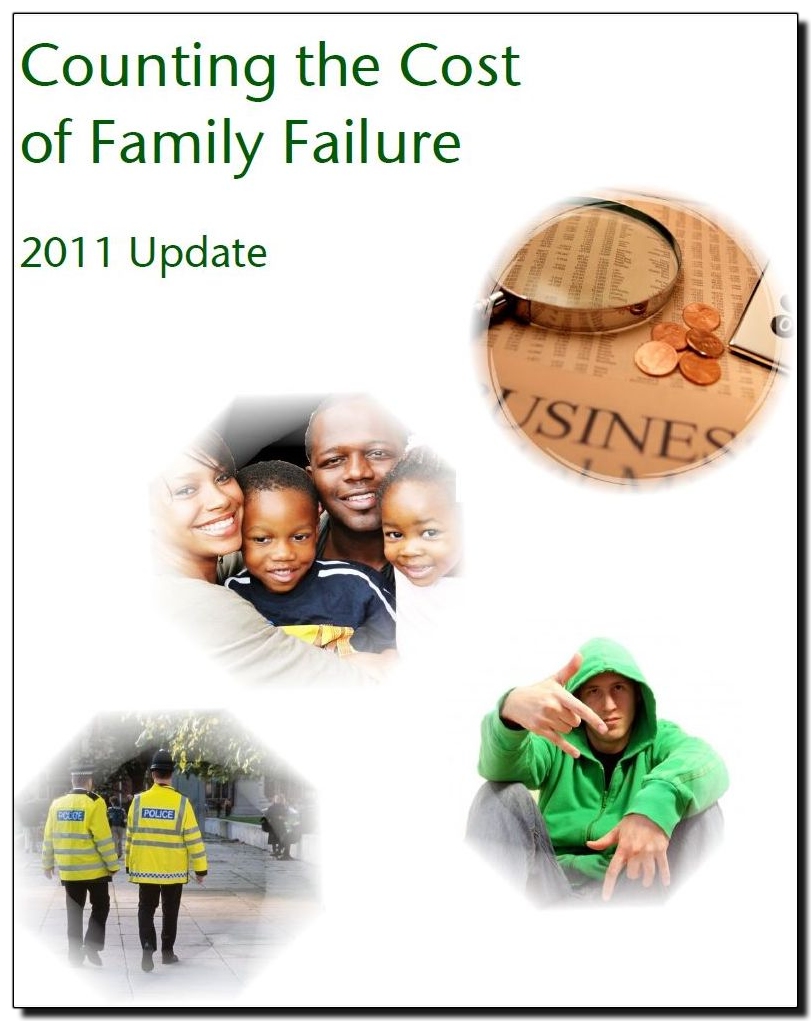 |
The Relationships Foundation has published the results of its third annual ‘Cost of Family Breakdown’ Index. The total cost of family breakdown to the UK was £41.74 billion in 2010-11. This is £1,364 for every taxpayer. The total cost has risen by £70million since last year. The index looks at the cost of family breakdown to five key areas of public policy: Tax and Benefits, Housing, Health and Social Care, Civil & Criminal Justice and Education & Young People not in education, employment or training. Commenting, Michael Trend, Executive Director of the Foundation said: “We have welcomed David Cameron’s commitment to make us the most family friendly country in Europe, and we are eagerly awaiting the findings of the government’s own review.” |
Click here to read the full press release and here for The Telegraph article that covered it. Sam Barker was interviewed on Sky News Radio and BBC Three Counties while John Ashcroft took part in a discussion on BBC Five Live. There was also a debate in the House of Lords on Marriage on the 10th of February during which the Bishop of Chester referred to our Family Failure Index in particular saying that he was “grateful to the Cambridge-based Relationships Foundation for collating the results of a wide range of research projects”.
2. What is the Marital Status of the Coalition?
On the occasion of the commencement of Marriage Week, the Relationships Foundation published a call for marital status to be reinserted into government data collection. Marital status was deleted from Government forms in 2003: most officially-sponsored research now refers to ‘couple parent families’. Current forms ask the single question ‘Are you married or living with a partner’ failing to distinguish between marriage and cohabitation.
Not collecting data on marital status is dangerous because:
• It perpetuates the misapprehension that cohabitation gives the same rights as marriage, and runs a real risk of deceiving people.
• It is more difficult to collect high quality data and generate good research into the outcomes of different types of relationship. What gets measured gets done, and it is important to see the impact of public policy in this area.
Furthermore, government language can ‘nudge’ behaviour, and the reintroduction of marital status would send a strong message that marriage matters, at a much lower cost than a tax allowance.
Our story was picked up by the press and we are pleased to say that the Work and Pensions Secretary then announced that the word “marriage” would again appear on official forms. Click hereto read the full press release.
3. Time for a parent-teacher meeting?
On the day the Education Bill received its second reading in Parliament, Relationships Foundation highlighted the cost of family breakdown to the education sector. According to our Cost of Family Failure report, family breakdown soaks up nearly £3 billion of the education and training budget each year. That would build 120 new schools every year, or employ 120,000 teachers.
Commenting, Michael Trend, Executive Director of the Foundation said:
“The cost of family failure to our education system is astounding.
“This is just the financial cost – who can estimate the price paid by children not given the chance to fulfil their potential, and teachers worn down by surrogate parenting?
“The Education Bill addresses the 30 or so hours a week children spend in school – but if we really want a first class education system, the Government needs to worry about the 138 hours a child spends at home.” Click here to read the full press release.
4. The Cost of Family Breakdown is Criminal
The Relationships Foundation highlighted the cost of family breakdown to the civil and criminal justice sector. According to our Cost of Family Failure report, family breakdown soaks up nearly £8 billion of the civil and criminal justice budget each year. Clearly there would be a lag between a reduction in family breakdown, its impact on criminal and civil justice issues, and a reduction in cost to the taxpayer. However, indicatively, £8bn equates to around 260,000 police officers (there are currently 143,000 police officers in the UK), or 65,000 new prison places.
Click here to read the full press release.
5. Family is the heart of the Big Society
On the final day of Marriage Week, Relationships Foundation was calling for the Coalition Government and the Office for National Statistics to include measures of family stability in the general wellbeing measurement. Despite the Prime Minister’s constant connection of wellbeing with happy families, the ONS does not talk about family in the consultation. While the consultation gives ‘Having good connections with friends and relatives’ as one of the options, it nowhere mentions family or family life.
It is clear that good family life promotes individual wellbeing and societal wellbeing:
In Crime: An analysis of 4,000 offenders by the Youth Justice Board found that 70% were from broken families. 30% of respondents in the 2008-09 British Crime Survey saw the main cause of crime as the lack of discipline from parents.
In Education: A Joseph Rowntree Foundation report found that children of separated parents perform less well in school and gain fewer educational qualifications, experience behavioural problems and leave school and home when young. Delegates at the annual conference of the Association of Teachers and Lecturers in 2008 said chaotic home lives and poverty made children unable to learn.
In Health: Divorced men and women are about 35% more likely to consult their GPs than those who are married, while children of divorced parents are 50% more likely to be admitted to hospital or to suffer accidental injury or poisoning than children whose parents are not divorced.
Commenting, Michael Trend, Executive Director of the Foundation said:
“The Office for National Statistics wants the measure of national wellbeing to reflect ‘what matters most in people’s lives’: what could matter more than our relationship with our partners, parents, and children?”
Click here to read the full press release.
We were also delighted to be mentioned in a leading article in the Swedish newspaper Svenska Dagbladet. Readers who have made it this far through our newsletter will get the gist of what is being discussed: “En ny rapport från tankesmedjan The Relationships Foundation avslöjar också svindlande ekonomiska kostnader. När de har räknat på kostnaderna för barnbidrag och bostadsbidrag till ensamstående föräldrar, vård och omsorg till följd av skilsmässor och psykisk ohälsa hos barn, insatser från polis och socialtjänst i våldsamma hem, utbildning för barn som inte får stöd hemifrån etcetera, landar den sammanlagda notan på nästan 42 miljarder pund om året. Den enskilde skattebetalarens bidrag är cirka 1400 pund.”